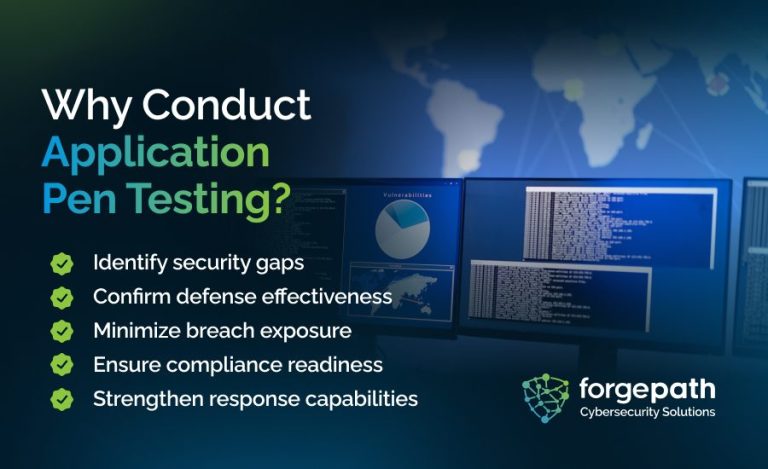
Modern businesses heavily rely on web applications to facilitate transactions, customer engagement, and secure critical data storage. Unfortunately, the increased dependency on these digital platforms also amplifies exposure to cyber threats.
Cybercriminals continuously seek to exploit vulnerabilities in web applications, underscoring the need for proactive identification and remediation of security weaknesses. This guide details the top ten web application vulnerabilities, describes detection methods, and outlines ForgePath’s strategic approach to effectively mitigate these threats.
1. Injection Attacks (SQL, NoSQL, Command Injection)
Injection attacks involve malicious inputs designed to manipulate web applications into executing unauthorized commands or queries. SQL injection remains particularly pervasive, potentially leading to unauthorized database access, sensitive data theft, or even complete database corruption. Identifying these threats typically involves a thorough analysis of code structure, extensive input validation testing, and deliberate injection simulations.
ForgePath proactively combats injection threats through rigorous penetration tests, regular code audits, and comprehensive developer training. Implementing parameterized queries, robust input validation processes, and secure coding standards dramatically reduces vulnerability risks.
2. Broken Authentication and Session Management
Weak authentication systems and improper session management can grant unauthorized individuals the ability to impersonate legitimate users. Attackers commonly exploit vulnerabilities such as easily guessed passwords, session fixation, and insecure handling of session tokens to compromise accounts.
At ForgePath, we conduct detailed security assessments targeting authentication procedures and session management systems. Multi-factor authentication (MFA), stringent password requirements and session expiration protocols form the cornerstone of our tailored mitigation approach.
Ongoing monitoring ensures that potential issues are quickly identified and rectified.
3. Cross-Site Scripting (XSS)
Cross-site scripting vulnerabilities occur when attackers insert malicious scripts into trusted websites. Users unintentionally trigger these scripts, allowing attackers to hijack user sessions, steal data or deface websites.
Detection involves rigorous scanning for improper input handling, analysis of HTTP responses, and targeted manual penetration tests.
ForgePath’s methodology involves detailed vulnerability scans, rigorous manual testing, and comprehensive security policies such as robust Content Security Policies (CSPs). We emphasize output encoding and secure coding training to mitigate XSS vulnerabilities effectively.
4. Sensitive Data Exposure
Inadequate protection of sensitive data such as financial information, healthcare records, or personal user details results in increased risk of breaches. Sensitive data exposure typically arises from weak encryption practices, insecure storage, and unprotected transmission channels.
ForgePath performs extensive evaluations of encryption practices and data handling procedures. Our team ensures robust encryption methods, including AES and SSL/TLS protocols, secure storage solutions, and adherence to stringent data privacy regulations, effectively safeguarding sensitive information.
5. XML External Entities (XXE)
XXE vulnerabilities allow attackers to exploit applications that process XML inputs, potentially enabling unauthorized access to sensitive data, server-side request forgery (SSRF), or causing service disruptions.
Detection requires meticulous testing of XML parsing mechanisms and comprehensive security audits.
ForgePath reviews XML parsing configurations, disables external entity processing, and advocates the use of secure XML parsing libraries. Our systematic approach ensures consistent protection against XML-based threats.
6. Security Misconfigurations
Security misconfigurations such as default credentials, unnecessary services, and mismanaged permissions represent frequent entry points for attackers.
These vulnerabilities commonly stem from inadequate security awareness, lack of regular assessments, or improper server configurations.
ForgePath conducts regular audits to identify and address misconfigurations. Establishing clear security guidelines, automated compliance verification, and continuous monitoring forms our proactive approach, ensuring robust security management.
7. Broken Access Control
Access control vulnerabilities arise when restrictions governing resource access are improperly implemented, allowing unauthorized access to sensitive information or functionality. Issues often involve incorrect permission settings, weak authorization checks, or inadequate enforcement of security policies.
ForgePath’s mitigation strategy includes detailed penetration testing, role-based access controls (RBAC), least-privilege principles, and regular audits of permissions. This systematic process ensures robust protection against unauthorized access.
8. Cross-Site Request Forgery (CSRF)
CSRF vulnerabilities deceive authenticated users into unknowingly executing unauthorized actions, such as unauthorized financial transactions or account modifications. Detection involves targeted testing of user actions and verification methods.
ForgePath combats CSRF threats by conducting extensive penetration tests, deploying anti-CSRF tokens, validating HTTP request origins, and providing detailed developer education. This layered approach significantly reduces CSRF vulnerabilities.
9. Using Components with Known Vulnerabilities
Third-party components and libraries frequently collects publicly known vulnerabilities, making applications susceptible to exploitation. Organizations often fail to track or update these dependencies effectively, increasing their security risks.
ForgePath proactively addresses this threat by continuously monitoring component vulnerabilities through software composition analysis (SCA). Regular updates, risk assessments, and active management of dependencies reduce the organization’s exposure to known vulnerabilities.
10. Insufficient Logging and Monitoring
Without comprehensive logging and monitoring, organizations frequently remain unaware of ongoing security incidents. Lack of timely detection delays response, intensifying the potential impact of attacks.
ForgePath enhances visibility through advanced logging, real-time monitoring solutions, and proactive threat detection. Our security operations team swiftly identifies anomalies, responds rapidly to threats, and continuously fine-tunes security processes to reduce vulnerabilities.
ForgePath’s Comprehensive Vulnerability Detection
ForgePath utilizes a combined strategy of automated scanning and manual penetration testing, thoroughly analyzing applications for vulnerabilities. Our cybersecurity professionals regularly monitor emerging threats, adapting our methods to effectively address new risks.
This proactive stance ensures organizations remain consistently protected against evolving threats.
The Importance of Regular Security Audits
Continuous security audits are essential to identify and address vulnerabilities proactively. ForgePath’s regular audits uncover security weaknesses before attackers exploit them, safeguarding organizations from financial losses, legal implications, and reputational damage. Our audit processes deliver detailed reporting, actionable insights, and ongoing guidance to ensure lasting security.
ForgePath empowers organizations with resilient cybersecurity frameworks, enabling confidence and stability in an increasingly complex digital landscape.