

Incident Response Retainer Services: Key Takeaways
- Incident response retainers come in three types: hourly-based, fixed-price, and subscription-based retainers
- Incident response (IR) services usually provide both proactive and reactive support, helping organizations not only detect and respond to cybersecurity incidents, but also recover from them effectively
- An incident response retainer helps you meet deadlines without scrambling for legal or PR support in the middle of a crisis
On February 21, 2024, Change Healthcare discovered a ransomware attack in its systems, triggering a nationwide disruption that jeopardized patients’ access to care on an unprecedented scale.
It’s a reminder that in cybersecurity, speed and preparedness are everything.
In this guide, we will:
- Understand what an incident response retainer is and the types available
- Discover the key benefits of having a retainer in place
- Break down what’s typically included in cyber incident response retainer services
Types of Incident Response Retainers
Incident response retainers typically fall into three categories, each tailored to help organizations stay prepared and respond effectively to cyber threats.
1. Hourly-Based Retainers
This flexible model charges a set hourly rate for incident response services. It’s often well-suited for smaller organizations or those with minimal incident history.
However, costs can quickly add up depending on how long and complex an incident becomes, making budgeting less predictable.
2. Fixed-Fee Retainer
With this option, you pay a flat rate for a clearly defined package of incident response services. It offers straightforward budgeting and is ideal for organizations that want cost certainty.
That said, it might not cover all scenarios, particularly large-scale or highly complex incidents.
3. Subscription Retainers With Value-Added Services
This comprehensive model includes a recurring fee that provides you with access to a suite of services beyond just incident response, such as vulnerability scans, employee training, and threat intelligence insights.
It’s best for organizations seeking an all-in-one approach to proactive and reactive cybersecurity management.
Understanding an Incident Response Retainer
An incident response retainer (IRR) is a pre-arranged agreement that gives organizations quick access to external experts when a cybersecurity incident strikes.
These services are typically offered by experts in digital forensics and incident response (DFIR), as well as by companies that develop incident response tools and maintain their own specialized response teams.
When engaging with a vendor that provides such tools, the service package often includes both access to their technology and the expertise of their incident response professionals.
What Is Included in Incident Response (IR) Services?
Incident response services, or IR services, typically include a range of proactive and reactive support measures to help organizations quickly detect, respond to, and bounce back from cybersecurity incidents.
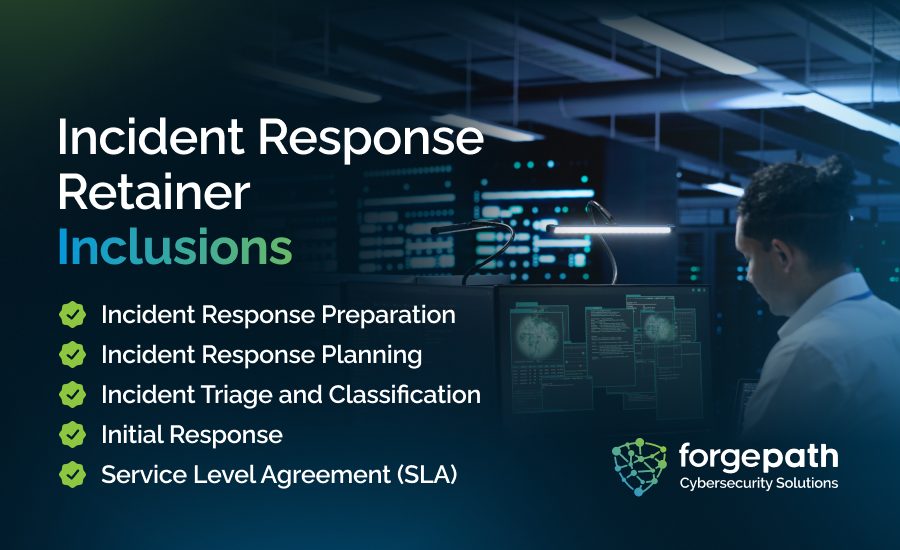
1. Incident Response Preparation
This involves evaluating the organization’s network, IT infrastructure, and existing security tools.
It includes ensuring access to relevant data and establishing clear, efficient procedures for investigating and managing potential incidents swiftly.
2. Incident Response Planning
The service provider works with the organization’s IT or cybersecurity teams to develop a customized plan that ensures a coordinated, efficient response to common security threats.
3. Incident Triage and Classification
A designated security analyst from the service provider remains on standby to receive incident reports, assess the situation, and determine whether it qualifies as a legitimate security event.
The analyst also evaluates the severity of the incident.
4. Initial Response
Using frameworks like the SANS Incident Response Model, the provider takes immediate action to contain and eliminate confirmed threats, recover affected systems, and conduct post-incident reviews to capture lessons learned.
5. Service Level Agreement (SLA)
The SLA spells out how you reach the provider’s response team and how the engagement begins once you call.
It also defines strict response timeframes, ranging from minutes to hours, for initiating containment and remediation efforts.
Benefits of an Incident Response Retainer
An incident response retainer is a strategic advantage that keeps your organization prepared, protected, and ready to act the moment a cyber breach begins.
1. Faster, More Effective Incident Response
In 2026, the global average cost of a data breach hit a record USD 4.99 million, a 12% increase over the previous year, according to IBM.
With stakes this high, an incident response retainer empowers your team to act fast and confidently.
That speed is critical to limiting damage, safeguarding data, and protecting your brand, especially during large-scale attacks.
2. Smarter Response Planning
A retainer isn’t just for reacting, it’s about being ready. It provides you with direct access to cybersecurity experts who can help you build a clear, actionable response plan.
That way, when an incident happens, your team knows exactly what to do, further reducing downtime and long-term damage.
3. Smoother Breach Notification Processes
When customer data is compromised, every second counts, especially under regulations like GDPR, which mandate reporting within 72 hours.
An incident response retainer boosts your ability to meet these deadlines, enabling your team to respond swiftly and effectively without scrambling for legal or PR support mid-crisis.
4. Access to Additional Cybersecurity Services
Most retainers include more than just emergency support.
Many providers offer extras like penetration testing, ransomware response, threat modeling, or employee security training.
Having these services under one roof gives your security program greater consistency and depth.
5. Ongoing, Proactive Security Support
A cybersecurity retainer transforms your approach from reactive to strategically proactive.
Instead of waiting for threats to strike, you get ongoing expert support, including continuous threat monitoring, regular check-ins, and early detection of vulnerabilities, often before attackers even have a chance.
The result? Less disruptions, stronger customer trust, and a more resilient business in the long run.
6. Predictable Costs and Better Budgeting
Incident response retainers provide a clear, upfront pricing model.
Instead of unexpected costs during a crisis, you’ll know exactly what to budget for. That means fewer financial surprises and faster access to critical services when you need them most.
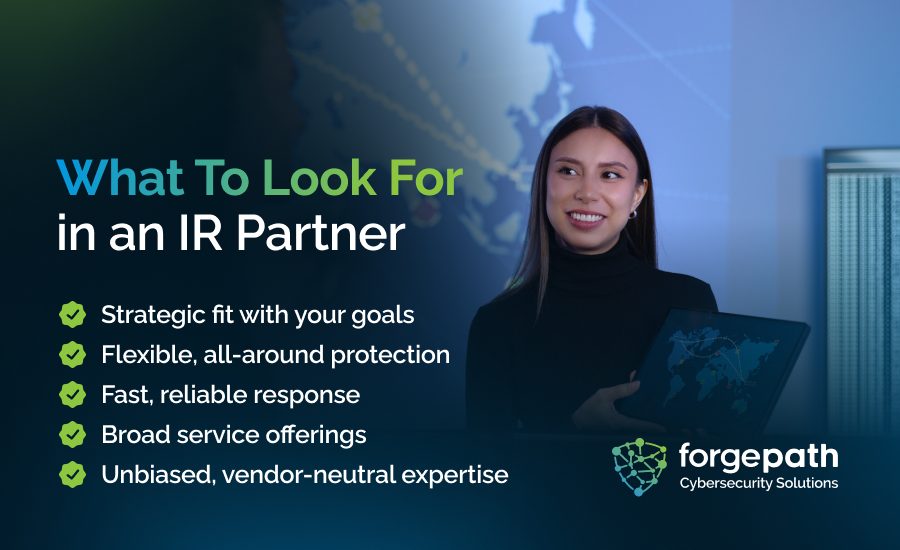
5 Things To Look For in an Incident Response Retainer Provider
Not all incident response retainers deliver the same value.
While many providers promise essential benefits, the real difference lies in how fast, how deep, and how effectively they can support you when it matters most.
As you compare providers, keep an eye out for these capabilities:
- Alignment with your priorities: The retainer should be customizable to fit your specific needs, workflows, and business goals, not just a one-size-fits-all approach.
- Comprehensive and flexible coverage: Choose a provider whose retainer includes both structured guidance and the flexibility to adapt to real-time threats. They should offer expert-led support capable of containing and resolving incidents efficiently.
- Rapid response capabilities: Make sure the provider can deliver fast, decisive action when an emergency hits, minimizing confusion, delays, and potential damage.
- Broad service offerings: Look for a retainer that includes a wide range of services, from technical forensics to strategic advisory, tailored to your organization’s unique risk profile.
- Technology-agnostic expertise: Your provider should be able to work seamlessly across different systems, platforms, and environments, regardless of your current tech stack.
Explore Trusted, Enterprise-Grade Security Solutions at Forgepath
At Forgepath, we provide comprehensive digital forensics and incident response services, tailored to safeguard enterprises before, during, and after cyber threats strike.
Proactive Services
Forgepath’s proactive solutions are built to detect and prevent breaches before they happen:
- Incident response retainer: Guaranteed expert support on standby, ready to deploy when every second counts.
- Ransomware readiness: Assessments and drills to evaluate how your systems would withstand a real attack.
- Threat hunting & discovery: Uncover hidden threats within your environment before they can cause harm.
Reactive Services
When incidents strike, Forgepath delivers fast, forensic precision:
- Incident response: Real-time investigation and containment to minimize damage and downtime.
- Ransomware response: Tactical expertise to analyze, neutralize, and recover from ransomware attacks.
- Digital forensics: Deep-dive analysis to determine what happened, how it happened, and what to do next.
Advisory Services
Guidance tailored to strengthen your long-term cyber resilience:
- Tabletop exercises: Scenario-based workshops to test and improve your team’s response capabilities.
- IR plan development & review: Build or optimize your incident response plans with expert insight.
Whether you’re preparing your defenses or navigating an active incident, Forgepath empowers your organization with proven expertise and industry-grade solutions.
Incident Response Retainer Services: FAQs
1. Why invest in a cyber incident response retainer?
It reduces downtime and limits damage during cyberattacks. With experienced responders already lined up, your team can respond quickly and recover faster, boosting resilience and readiness.
2. What’s typically included in a retainer?
Services often cover cyber incident response, forensic analysis, malware investigation, threat intelligence, tabletop exercises, and IR plan development and testing.
3. How do I select the right retainer?
Consider your organization’s size, industry, risk profile, and in-house capabilities. Look for customizable plans, deep expertise, and alignment with your security goals and compliance needs.