Insider Threat Detection: Key Takeaways
- Most insider risks can be traced back to two types: malicious intent and careless mistakes
- Malicious insiders may steal or sabotage for personal gain, while negligent insiders expose systems through errors like weak passwords
- Organizations must combine technical and human-focused defenses to detect and stop insider incidents before they escalate
Employees should be your first line of defense. But what happens if they become the source of threats?
Nearly 48% of organizations saw insider attacks increase in 2024, with 51% facing six or more incidents. For almost a third of those organizations, the aftermath was costly, with remediation expenses topping $1 million.
If you’re unsure how to recognize insider risks or stop them before they explode into major breaches, we’ve got your back.
We’ll walk you through:
- The different types of insider threats
- Five warning signs of an insider threat
- How to prevent and respond to insider incidents
Types of Insider Threats
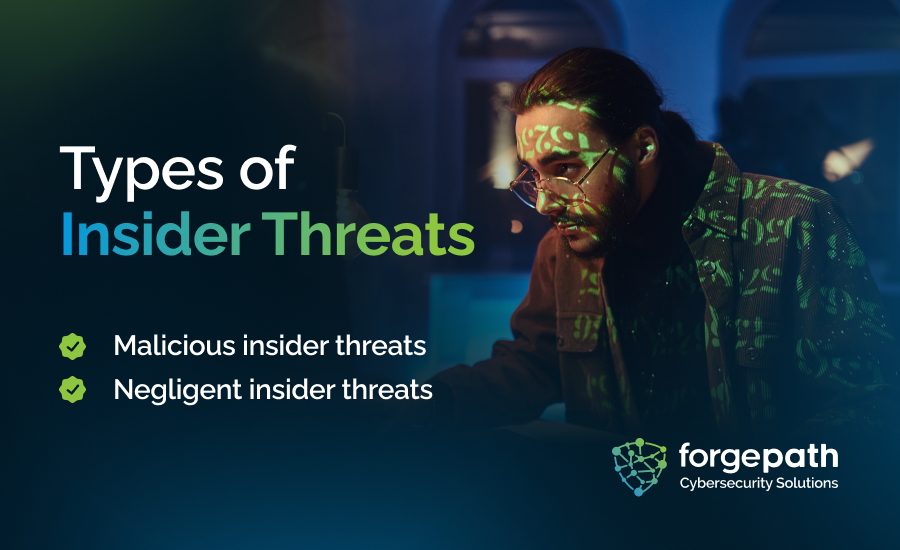
Insider threats typically fall into two main categories: malicious and negligent.
1. Malicious Insider Threats
Malicious insider threats are intentional and often premeditated.
They usually involve a current or former employee who’s either disgruntled, financially motivated, or acting on behalf of a third party.
For example, in May 2025, Coinbase revealed that cybercriminals had bribed support agents to access customer data and hand it over to attackers.
Look for behaviors like:
- Misusing credentials or privileged access
- Selling, leaking, or destroying sensitive data
- Creating back doors or altering system settings to enable future access
2. Negligent Insider Threats
Negligent insider threats stem from mistakes, not malice.
These incidents happen when someone accidentally exposes the organization to risk through carelessness or by falling for deception.
For example, in August 2022 a few Microsoft employees accidentally posted login credentials on GitHub. That simple mistake could have handed attackers access to Azure servers and other internal systems.
Anyone can become a negligent insider. Common culprits include:
- An employee who clicks a phishing link in an email message
- Someone who reuses weak passwords
- An individual who misplaces a work device or forgets to lock down an endpoint or workplace device
Top 4 Insider Threat Indicators
How do you know when an insider might be turning into a threat? Keep your eyes peeled for these red flags:
1. Unusual Login Behavior
If your team doesn’t work on flexible schedules, their logins should look consistent, meaning same times, same devices, same locations.
When those patterns suddenly change, it could be a sign that someone’s trying to access your systems without authorization.
Watch out for the following:
- Login attempts from unexpected locations or unfamiliar devices
- Access activity during unusual hours such as late nights, weekends, or holidays
- A spike in failed login attempts, especially involving generic usernames like “admin” or “test”
2. Privilege Escalation
Admin rights unlock sensitive data and system controls.
If a user grants elevated access to others, or if you see a sudden rise in privileged accounts, it might signal an insider moving to harvest data, possibly for sale on the dark web.
3. Unauthorized Use of Applications
Most organizations rely on mission-critical systems like CRM, ERP, and financial platforms.
To protect them, companies use least-privilege access, granting users only what they need.
Any attempt to access applications outside those permissions is a red flag and should be investigated immediately to prevent a breach.
4. Strange Employee Behavior
Shifts in employee behavior can often be an early warning sign of insider risk.
Watch for changes that don’t align with normal patterns:
- Abrupt resignation without clear reason
- A typically cooperative employee becoming withdrawn
- Sudden drop in performance or lack of interest in responsibilities
- Frequent conflicts with managers or peers over policies or decisions
- Signs of unexplained financial stress or sudden, unusual financial gain
Insider Threat Risk Factors
Some internal setups practically roll out the red carpet for insider incidents.
They can include:
- Excessive access privileges: Allowing too many users broad access to sensitive systems increases the chances of misuse or compromise.
- Shadow IT: When employees install unapproved applications outside of IT’s oversight, serious security risks follow. The unauthorized software might be insecure, incompatible with existing systems, or open to attackers through back doors.
- Bring Your Own Device policies: Personal devices used for business under BYOD policies create additional entry points for attackers.
Which Industries Are Most at Risk from Insider Threats?
Any organization with employees, contractors, or partners is vulnerable to insider threats.
Unlike external attacks, these threats come from individuals who already know the systems, policies, and security gaps. The threats are more difficult to detect and defend against.
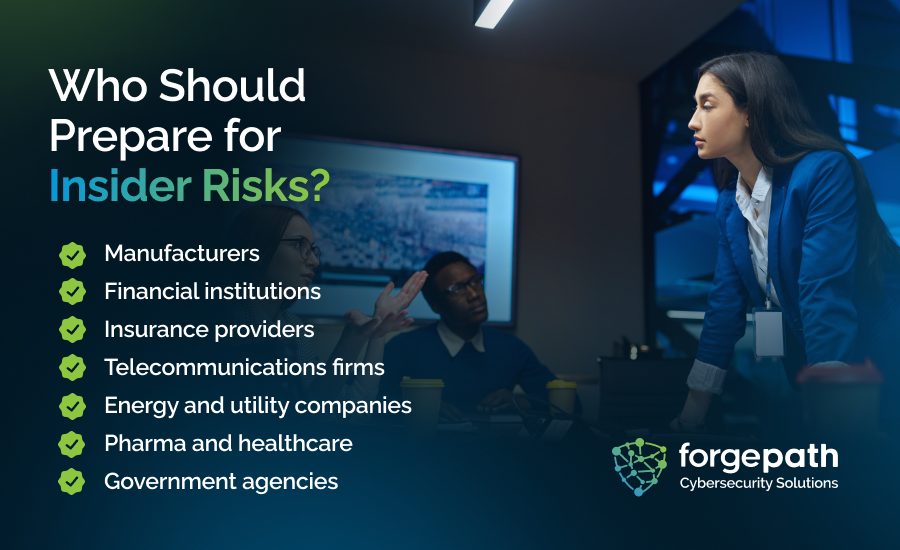
Industries most at risk include:
- Manufacturers
- Financial institutions
- Insurance providers
- Telecommunications firms
- Energy and utility companies
- Pharma and healthcare
- Government agencies
8 Ways To Prevent and Stop Insider Threats
Most security defenses are built to keep outsiders away. What happens when the threat is already inside?
Here’s what you can do:
1. Keep Systems Patched and Updated
Unpatched systems are some of the easiest entry points for attackers. Many breaches exploit vulnerabilities in systems and application software that could have been secured with patches available months earlier.
To lower this risk, establish a formal vulnerability management program that includes:
- Automated patch deployment to minimize delays and human error
- Prioritized patching for critical systems based on risk and exposure
- Regular verification to confirm patches are applied and effective
2. Monitor Endpoints for Suspicious Activity
Deploy endpoint detection and response tools that continuously log and analyze activity.
EDR can help identify unusual behavior that slips past traditional defenses.
3. Leverage Threat Intelligence
Real-time threat intelligence gives organizations visibility into emerging tactics and indicators of compromise before they hit the network.
Integrating threat feeds into your SIEM or EDR tools can help you detect abnormal insider behavior such as unusual data transfers, login attempts from atypical locations, and the use of compromised credentials.
4. Educate Employees on Security Hygiene
Studies show that 84% of U.S. organizations report fewer phishing incidents after implementing regular security awareness training.
To achieve similar results, train employees on password hygiene, safe browsing, and how to recognize phishing attempts.
Reinforce good habits such as connecting only to secure Wi-Fi. Update training often to reflect new threats.
5. Enforce Least-Privilege Access
Grant users only the access they need to perform their roles.
Apply role-based access controls and regularly audit permissions to catch “privilege creep,” in which employees accumulate unnecessary access over time.
This approach limits the blast radius, even if someone abuses credentials.
6. Monitor Privileged Accounts With PAM
Use a privileged access management solution to enforce:
- Just-in-time access to grant privileges only when needed
- Approval workflows for sensitive actions
- Tamper-proof session logs to track and audit activity
These controls make it easier to spot unusual activity like mass data downloads or unauthorized system changes.
7. Separate Duties and Responsibilities
Divide critical tasks such as approving payments, managing backups, or handling sensitive data between multiple people.
This reduces opportunities for a single insider to commit fraud, alter data, or cover their tracks without oversight.
8. Strengthen Offboarding and Access Revocation
When employees or contractors leave, immediately revoke their access and disable accounts.
Automating this process through HR and identity management systems can help close gaps and prevent delays.
Without strict offboarding, former employees with lingering access remain one of the most common insider threats.
Stay Ahead of Insider Threats With Privileged Access Management from Forgepath
Insider threats are difficult to detect because they come from people you trust with access to your systems and data.
A single incident can cause serious damage, including financial losses, compliance violations, and reputational harm, if it isn’t addressed quickly.
Forgepath offers you the visibility, control, and expertise to detect these risks early and stop them before they become costly breaches.
Our services include:
- Proactive defense: Threat hunting and ransomware readiness can help uncover risks early and strengthen defenses against insider-driven activity.
- Rapid response: Our digital forensics and incident response team quickly investigates, contains, and resolves insider incidents to keep your business running.
- Stronger identity controls: Identity and access management, including privileged access management, ensures users have only the access they need, limiting opportunities for misuse.
- Strategic guidance: Tabletop exercises and IR plan reviews prepare your team to recognize suspicious behavior and respond effectively.
Insider Threat Detection: FAQs
What is an insider threat?
An insider threat is when someone with trusted access, like an employee, contractor, or partner, uses that access to damage the organization.
They often know the systems, data, and workflows well enough to bypass defenses.
When it’s intentional, profit is usually the motivator. That could mean stealing data or trade secrets to sell or share with a third party.
These threats are hard to spot and can cause serious damage fast.
What are examples of insider threats?
- An employee steals customer data to sell on the dark web
- A staff member clicks on a phishing link, giving attackers access to the network
- A hacker gains control of an employee’s credentials through malware and uses them to move laterally across systems
- A departing employee deletes critical files or sabotages systems out of spite
How can organizations detect insider threats early?
Your company can detect insider threats early by monitoring user behavior for red flags like odd login times, large data transfers, and access outside normal roles.