Health Insurance Portability
and Accountability Act (HIPAA)

LOCATION
  • United States
industry
  • Healthcare
Requirements

3

compliance-hero-img
Blue decoration
Achieve Compliance Confidence

Understanding HIPAA: Privacy, Security, and Compliance

HIPAA compliance is rooted in two foundational rules—the Privacy Rule and the Security Rule—which together form the framework for protecting health information. The Privacy Rule establishes standards for how protected health information (PHI) may be used and disclosed, while granting individuals rights over their medical data. It requires organizations to provide Notice of Privacy Practices (NPP), obtain patient authorizations when necessary, and limit disclosures to the minimum necessary.

The Security Rule specifically targets electronic PHI (ePHI), requiring organizations to implement three categories of safeguards including administrative, physical, and technical safeguards.

To comply with HIPAA, organizations must not only implement these safeguards but also maintain thorough documentation, conduct regular audits, and manage relationships with third-party vendors through Business Associate Agreements (BAAs). HIPAA is not a one-time project—it’s a continuous program of governance, risk management, training, incident preparedness, and technology alignment.

Forgepath helps organizations operationalize HIPAA requirements by combining security best practices, proactive monitoring, and expert consulting to ensure long-term compliance and resilience.

Be Informed

HIPAA Compliance At a Glance

The Health Insurance Portability and Accountability Act (HIPAA) is a U.S. law designed to protect the privacy and security of individuals’ medical information through implementation of three types of safeguards: 1) administrative, 2) physical, and 3) technical.

accordion-icon Requirements

Administrative Safeguards

Conduct regular risk assessments, establish robust security policies and procedures, provide ongoing security awareness training, designate clear security responsibilities, and create incident response plans.

Physical Safeguards

Secure facilities, restrict access to workstations, implement stringent device and media control protocols, ensure proper disposal of PHI, and establish secure areas for data storage.

Technical Safeguards

Implement strong access control measures, encryption standards for electronic PHI, robust audit controls, secure transmission protocols, authentication systems, and intrusion detection mechanisms.

accordion-icon How Forge Path Can Help

HIPAA Risk Assessment

Evaluate existing policies, procedures, and security controls to identify areas of non-compliance and deliver actionable remediation plans aligned with HIPAA’s Security and Privacy Rules.

Compliance Management as a Service

Centralized, continuous oversight of HIPAA compliance activities—tracking policies, documentation, and control validation across your organization.

HIPAA Security & Privacy Training

Role-based education for workforce members, tailored to HIPAA-specific requirements, threats, and real-world use cases.

irtual Chief Information Security Officer (vCISO)

Strategic leadership and policy development to build and mature your HIPAA-aligned security program without the cost of a full-time executive.

Third-Party Risk Management

Assess and monitor business associates handling PHI to ensure appropriate safeguards are in place per HIPAA’s Business Associate Agreement (BAA) requirements.

Data Loss Prevention (DLP)

Enforce policy-based controls to detect and prevent the accidental or malicious transmission of PHI across email, cloud, and endpoint systems.

Vulnerability Management

Identify, prioritize, and remediate exploitable weaknesses in systems that store or transmit PHI, with validation against HIPAA’s Technical Safeguard expectations.

Forge Path logo
logo
Cloud Systems & Security Manager
Zero.health
Working With ForgePath

Forgepath delivered outstanding service on our network and app security tests.

View Full Testimonial
logo
Cloud Systems & Security Manager
Zero.health

Forgepath delivered outstanding service on both our network penetration test and application security assessment.

When a critical customer need arose, they quickly adjusted their schedule to meet our urgent timeline without compromising quality.

Their technical expertise, clear guidance, and hands-on remediation support helped us meet our EOY goals efficiently.

We were especially impressed by their flexibility, responsiveness, and professionalism throughout the process.

parsysco-with-image-forgepath
Chief Executive Officer
parsysco.com
Working With ForgePath

Forgepath separates themselves from the rest as they’re a true security partner.

View Full Testimonial
logo
Chief Executive Officer
parsysco.com

Forgepath separates themselves from the rest as they’re a true security partner to Parsysco. They took the time to understand our requirements and how things were working with our previous provider.

We were impressed by how quickly they formulated a new strategy and approach. They helped us identify our challenges and consistently brought forward solutions that were in Parsysco’s best interest.

Most vendors only care about selling something, Forgepath took the personal relationship and partnership approach that we value greatly.

logo-decor
Ready to Get Started?

Take Control of Your HIPAA Compliance

Every patient record is critical. Ensure compliance, secure sensitive health information, and build trust. Partner with Forgepath today for effective, sustainable HIPAA compliance management and cybersecurity.
expert-cta-img
FAQ

Have Questions About HIPAA Compliance?

HIPAA applies to healthcare providers, health insurance plans, healthcare clearinghouses, and any vendors or subcontractors (business associates) handling protected health information (PHI) on their behalf.

HIPAA non-compliance can lead to significant financial penalties, legal actions, damage to reputation, and loss of patient trust.

Regular HIPAA risk assessments are required at least annually or whenever significant changes in operations, technology, or regulations occur.

PHI includes any health-related information that can be used to identify an individual, such as medical records, billing data, insurance information, lab results, and appointment histories.

Yes. All covered entities, regardless of size, must meet HIPAA compliance obligations if they transmit or store PHI electronically.

Maintain up-to-date documentation of risk assessments, training, incident response plans, and security controls. Forgepath helps centralize and track these efforts for audit readiness.

Organizations must promptly investigate the breach, contain the damage, notify affected individuals, report to regulators, and document all mitigation steps.

Expert Perspectives on Emerging Cyber Threats and Trends

Forgepath FTC Safeguards Rule

What Is the FTC Safeguards Rule?

The FTC Safeguards Rule is about how to protect customers’ non-public personal informat…

Read Full Article
The top ten web application vulnerabilities

Web Application Vulnerabilities – And How to Fix Them

Modern businesses heavily rely on web applications to facilitate transactions, customer e…
Read Full Article
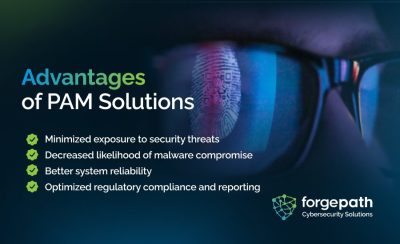
An infographic highlighting the benefits of PAM solutions

What is Application Penetration Testing? Benefits & FAQs

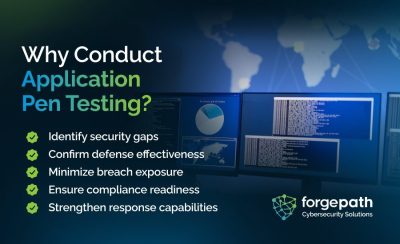
Application Penetration Testing: Key Takeaways Application penetration testing helps …
Read Full Article
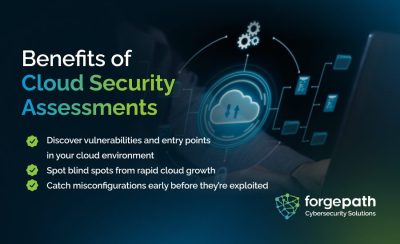
An infographic highlighting the benefits of cloud security assessments

Identity and Access Management: How It Works, Pillars And FAQs

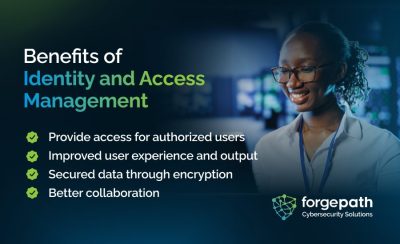
Identity Management Explained: Key Takeaways Identity and access management (IAM) ens…
Read Full Article
An infographic highlighting the benefits of PAM solutions

Privileged Access Management: Types, Benefits & Challenges

Privileged Access Management: Key Takeaways Privileged access management (PAM) is a c…
Read Full Article
An infographic highlighting the benefits of cloud security assessments

Cloud Security Assessments: Benefits, Checklist And Processess

Cloud Security Assessment: Key Takeaways A cloud security assessment identifies vulne…
Read Full Article
An infographic highlighting what’s included in AI pen testing, the tools used, and the top AI threats

AI Pen Testing: Inclusions, Testing Tools & AI Threats

AI Pen Testing Explained: Key Takeaways Each AI pen test includes expert analysis, re…
Read Full Article
How AI enhances threat detection and response

What Is AI In Cybersecurity? What You Need to Know

Introduction: The Intersection of AI and Cybersecurity Artificial Intelligence (AI) is…
Read Full Article
Forgepath Penetration Testing

Introduction to Penetration Testing

A penetration test or pentest, is a simulated cyber-attack carried out by experienced sec…
Read Full Article