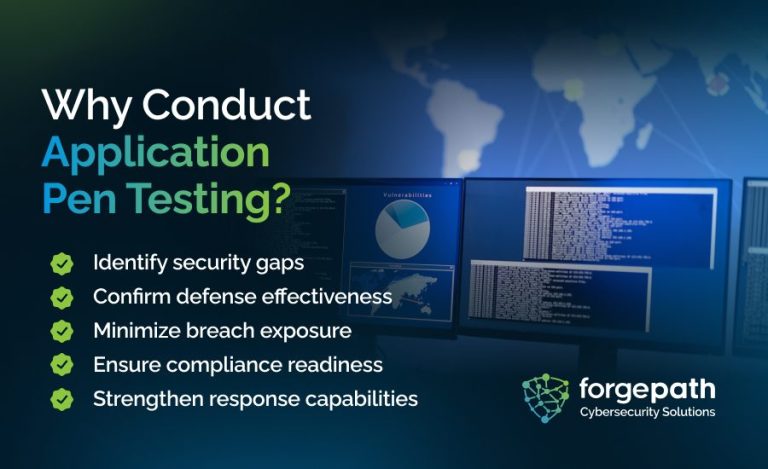
A penetration test or pentest, is a simulated cyber-attack carried out by experienced security consultants. Its primary objective is to proactively identify vulnerabilities in your networks, applications, and systems before malicious actors can exploit them. By mimicking real-world threat scenarios, a pentest helps you understand your true risk exposure and prioritize remediation efforts.
Types of Penetration Tests (Network, Web, Mobile, Physical)
Pentests can focus on different attack surfaces depending on your environment and goals.
- Network pentest’s assess internal and external network infrastructure, firewalls, and routers.
- Web application pentest’s probe websites and APIs for flaws like SQL injection or XSS.
- Mobile pentest’s examine iOS and Android apps for insecure data storage or improper authentication.
- Physical pentest’s test on-premises security controls including badges, locks and alarms to spot gaps in physical access.
Reconnaissance and Information Gathering
Passive vs. Active Reconnaissance
- Passive reconnaissance collects publicly available data including WHOIS records, DNS entries, and social media to map the attack surface without touching your systems.
- Active reconnaissance involves direct interaction, such as port scanning and banner grabbing, to discover live hosts, open ports, and services.
Open-Source Intelligence (OSINT) Techniques
Penetration testers leverage OSINT tools to harvest information from public sources including employee profiles on LinkedIn, leaked credentials on paste sites, or code repos on GitHub. This background intel often reveals overlooked entry points or misconfigurations.
Vulnerability Analysis
Automated Scanning Tools
Automated scanners rapidly pinpoint common weaknesses and unpatched software, misconfigured servers, or default credentials. They generate initial lists of potential issues for further review.
Manual Verification and False-Positive Elimination
Experienced testers manually validate each finding to weed out false positives which is a critical step that ensures your team focuses only on real risks. They will verify exploitability and context, such as whether a detected service is actually reachable in production.
Exploitation and Post-Exploitation
Gaining and Escalating Access
Once a vulnerability is confirmed exploitable, testers attempt to gain access by exploiting an SQL injection to dump credentials. They then seek privilege escalation paths to simulate an attacker’s lateral movement.
Maintaining Persistence
To fully understand the impact, pentesters may demonstrate how an attacker could maintain persistent access, planting web shells, adding new user accounts, or abusing misconfigured scheduled tasks, always under strict safety controls.
Data Exfiltration Scenarios
In controlled conditions, testers simulate data exfiltration to show how an attacker could siphon sensitive information. This might involve staging files, encrypting traffic to evade detection, and measuring how quickly your security stack raises alerts.
Reporting and Deliverables
Executive Summary for Leadership
The pentest report begins with a high-level Executive Summary outlining key findings, overall risk posture, and recommended next steps in plain language, empowering executives to prioritize budget and resources.
Detailed Technical Findings
The deliverable is a granular breakdown of each vulnerability including its technical description, exploit steps, and severity rating. Screenshots or log snippets illustrate exactly how the issue was discovered.
Risk Ratings and Remediation Roadmap
Findings are categorized by high, medium and low impact accompanied by a prioritized remediation roadmap. This helps your IT and security team tackle the most dangerous threats first and plan longer-term security investments.
Benefits of a Penetration Test
Identifying Hidden Security Gaps
Penetration testing uncover flaws that routine vulnerability scans, miss complex business logic errors, chained exploits, or insecure assumptions in custom code, giving you a clearer picture of your true risk.
Meeting Compliance Requirements
Many regulations mandate regular penetration testing. A professionally executed engagement not only satisfies audit requirements but also demonstrates due diligence to stakeholders and regulators.
Strengthening Overall Security Posture
By validating and improving defenses, pentests drive continuous security maturity. Remediation activities build tighter policies, better patch management, and more resilient incident response processes.
Preparing Your Organization
Defining Clear Objectives and Scope
Align penetration testing goals with business priorities, whether it’s safeguarding customer data, certifying a new application, or testing a critical network segment. Clear scoping prevents wasted effort and unexpected costs.
Ensuring Infrastructure Readiness
Notify key teams such as Operations, Helpdesk, and Incident Response about the pentest schedule. Verify that monitoring and alerting systems are tuned to avoid false alarms and that backups are recent in case of unintended disruption.
Coordinating with Internal Teams
Assign a technical point of contact to handle tester questions, escalate critical findings in real time, and facilitate evidence collection. Collaboration speeds remediation and improves overall test quality.
Frequently Asked Questions
Typical Duration and Cost
A standard mid-sized corporate pentest runs 2-4 weeks from kickoff to final report.
Service Interruptions and Safeguards
Professional testers adhere to strict rules of engagement, critical systems are tested during agreed maintenance windows, and safe-stop procedures exist to halt testing if live operations are impacted.
Pentest vs. Vulnerability Scan. What’s the Difference?
Vulnerability scans automate checks for known issues, while pentests combine manual techniques, creative exploit chaining, and business-logic analyses offering a far deeper view of your real security posture.