Cloud Security Assessment: Key Takeaways
- A cloud security assessment identifies vulnerabilities and reduces risk across your cloud environment through a structured, expert-led evaluation
- A cloud security assessment covers four key areas: stakeholder interviews, technical testing, actionable findings, and a strategic review to align teams and priorities
- Before launching a cloud security assessment, set clear objectives and ensure the right teams and resources are in place to support it
With 96% of organizations reporting moderate to extreme concern about public cloud security, it’s clear that cloud risk is top of mind across industries.
As multicloud environments become more complex, the associated threats increase in scale and sophistication.
In this guide, we will:
- Explore the benefits of cloud security assessments
- Apply a step-by-step checklist to identify misconfigurations, access risks, and blind spots
- Walk you through the process on how to execute a successful assessment
Why Perform a Cloud Security Assessment?
A cloud security assessment is a structured evaluation designed to pinpoint security gaps and mitigate risks within an organization’s cloud environment.
Here’s why it matters:
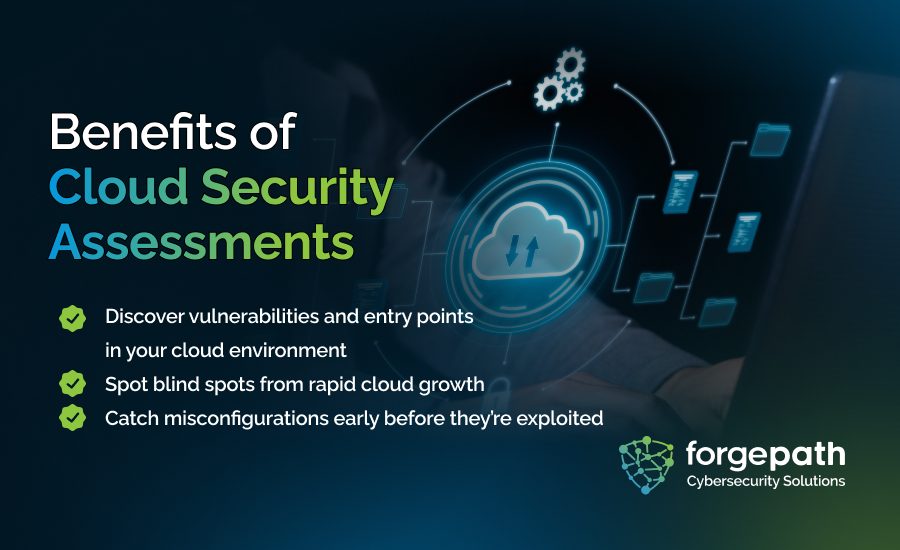
- Identify security blind spots created by rapid cloud adoption and uneven oversight across accounts or subscriptions
- Protect less prioritized workloads that may lack sufficient security controls but can still cause severe damage if breached
- Adapt to remote work realities by reinforcing security beyond traditional perimeter defenses
- Detect misconfigurations early, especially those caused by setup errors in new or evolving cloud environments
- Strengthen user account management by addressing risks like excessive permissions, unsecured IP access, and lack of MFA
- Reduce the risk of credential misuse through enhanced authentication strategies and access controls
- Improve incident detection and response with proper logging, enabling faster recovery from potential breaches
Common Causes of Cloud Misconfigurations
Cloud misconfigurations occur when cloud resources are improperly set up, inadvertently weakening your security posture.
These issues can expose sensitive data, open unauthorized access pathways, and often serve as the initial foothold for attackers in cloud environments.
They can include:
- Manual errors: Simple mistakes made during cloud setup or configuration
- Environment complexity: Managing multiple providers and services increases the likelihood of oversight
- Unclear responsibilities: Misinterpreting the cloud provider’s role vs. the customer’s role in securing infrastructure
- Neglected updates: Failing to adjust configurations after infrastructure or service changes
- Overly permissive access: Assigning broad user or service permissions beyond what’s necessary
- Default settings: Leaving default credentials or settings unchanged during deployment
Core Components of a Cloud Security Assessment
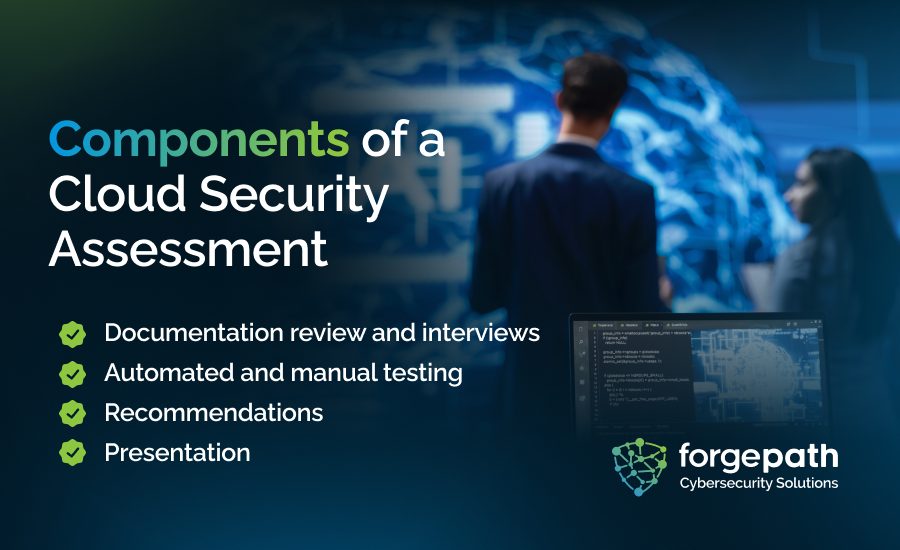
A comprehensive cloud security assessment typically includes four key phases designed to evaluate risks and enhance your cloud posture:
1. Documentation and Stakeholder Interviews
The process begins with reviewing existing documentation and engaging key stakeholders.
This helps the assessment team understand your:
- Business goals
- Current cloud architecture
- Any planned changes to the environment
2. Automated and Manual Testing
Specialized tools and manual techniques are used to collect system data, detect misconfigurations, assess compliance with best practices, and map out potential attack paths.
This dual approach ensures both breadth and depth of visibility.
3. Findings and Recommendations
Each identified issue is accompanied by a customized remediation plan.
These recommendations are prioritized based on:
- Risk severity
- Business impact
- Feasibility
4. Results Presentation and Strategic Alignment
The assessment concludes with a collaborative session to walk through technical findings and strategic insights.
This collaborative step ensures executives understand both technical findings and the strategic impact on risk posture and compliance.
It also provides a roadmap for implementation and future improvements.
Cloud Security Assessment Checklist
A well-executed cloud security assessment zeroes in on the areas that matter most to protect your data, decrease exposure, and ensure compliance with industry standards.
1. Policies and Procedures
Strong policies form the backbone of any effective cloud security strategy.
Review both your internal policies and your cloud provider’s documentation to ensure they align with your business requirements and compliance obligations.
Focus on whether the following areas are clearly defined and enforced:
- Access control and authentication mechanisms
- Data encryption standards (at rest and in transit)
- Incident response and disaster recovery protocols
- Audit logging and system monitoring
- Reporting procedures and escalation paths
- Compliance with frameworks like NIST, ISO 27001, and industry-specific regulations
Identifying gaps in these areas helps prioritize remediation and harden overall governance.
2. Access Control and Identity Management
Mismanaged access is a leading cause of cloud breaches. Evaluate how identities are managed and whether access privileges reflect the principle of least privilege.
Key questions to assess include:
- Is access limited strictly to authorized users and roles?
- Is multifactor authentication (MFA) enforced across all accounts?
- Are strong password policies implemented and monitored?
- Are inactive accounts regularly reviewed and disabled?
- Is temporary access tightly controlled and promptly revoked?
- Are third-party access permissions limited and governed by clear contracts and controls?
3. Network Security
Securing cloud networks requires layered protections to defend against internal misuse and external threats.
Ensure the following are implemented and regularly tested:
- Firewalls configured to restrict unauthorized traffic
- Encryption of all data in transit
- Intrusion detection and prevention systems (IDPS) actively monitoring threats
- Secure VPN access for remote users
- Network segmentation to isolate sensitive systems and limit lateral movement
4. Directory Services and Privilege Management
Directory services are often the core of identity management. Improperly configured directories can open doors to escalation and unauthorized access.
Assess these controls:
- Are directory services in place and properly maintained?
- Are permissions regularly audited and updated?
- Is sensitive data access limited based on clearly defined roles?
5. Data Protection, DLP, and Backups
Data loss prevention (DLP) and resilient backups are essential for ensuring data integrity and business continuity.
Evaluate the following:
- Is sensitive data identified and classified using automated tools?
- Is data encrypted at rest using strong, up-to-date algorithms?
- Are regular backups performed and tested for recovery readiness?
- Are backups stored securely, preferably offsite or in immutable formats?
6. Security Operations and Incident Response
Cloud security is not set-and-forget, as it requires real-time monitoring and a responsive security team.
Review operational readiness by asking:
- Are alerts actively monitored and triaged?
- Is there a clear process for incident escalation and response?
- Are response playbooks up to date and regularly tested?
7. Encryption and Key Management
Encryption is only as strong as its implementation and key management. Ensure that:
- All sensitive data is encrypted in transit and at rest
- Encryption follows recognized standards (for example, AES-256)
- Encryption keys are centrally managed, rotated regularly, and protected by strict access controls
8. Monitoring and Audit Readiness
Continuous monitoring is critical for threat detection and compliance assurance.
Verify the following:
- Are logs and events centralized, retained, and analyzed in real time?
- Are regular audits conducted against internal and external benchmarks?
- Are controls regularly reviewed to stay ahead of evolving threats?
Key Considerations Before Conducting a Cloud Security Assessment
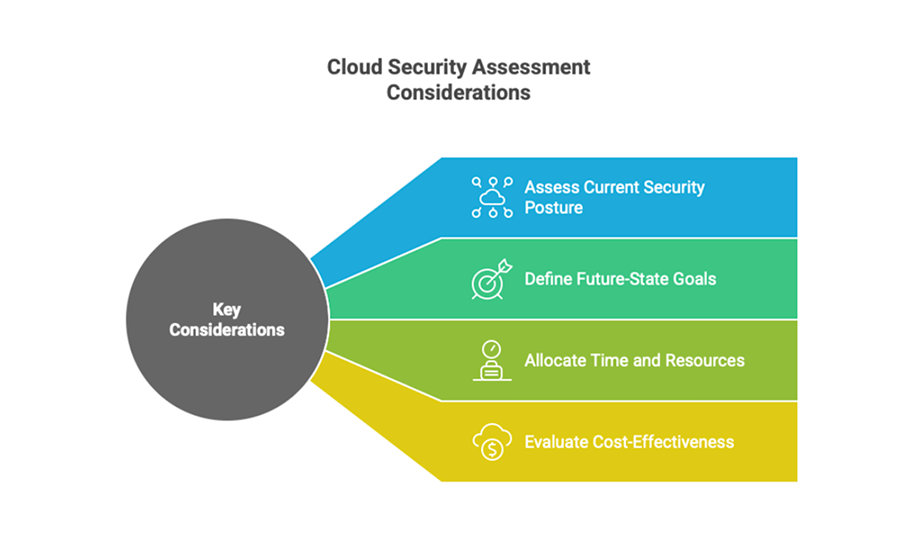
Before initiating a cloud security assessment, it’s essential to establish clear expectations and allocate the right resources.
Here are four foundational steps to guide your approach:
1. Assess Your Current Security Posture
Begin by documenting your existing cloud architecture, security controls, and monitoring capabilities.
This baseline helps highlight gaps and ensures the assessment focuses on areas that truly need improvement.
2. Define Your Future-State Goals
Clarify what your ideal cloud environment looks like.
Consider compliance requirements, business growth, scalability, and integration needs. This vision informs both the scope and desired outcomes of the assessment.
3. Allocate Sufficient Time and Resources
A thorough cloud security assessment typically involves input from multiple departments, security engineers, DevOps, infrastructure teams, and compliance leads.
Plan for at least two to four weeks, depending on the complexity of your environment.
Allocate dedicated time for:
- Stakeholder interviews
- Configuration reviews
- Access audits
- Incident response plan validation
To prevent operational disruption, stagger these tasks and ensure each team understands its role in the process, as rushed or poorly coordinated assessments often miss critical gaps.
4. Evaluate Cost-Effectiveness
Cloud assessments can vary in complexity and rates, especially when third-party tools or consultants are involved.
Analyze the potential return on investment by weighing the risks of undetected misconfigurations against the cost of remediation.
How To Perform a Cloud Security Assessment
Successfully securing your cloud environment starts with a clear, structured strategy.
A cloud security assessment isn’t just a checkbox. It’s your chance to expose hidden risks, validate defenses, and build a more resilient foundation.
Here are six essential steps to guide the process:
1. Define the Assessment Scope
Start by clearly outlining the boundaries of the assessment. Identify which cloud platforms, business units, and regulatory requirements will be included.
Align the scope with industry frameworks like ISO 27001, NIST CSF, or CIS Controls to ensure your evaluation is both comprehensive and standards-aligned.
2. Determine Cloud Assets
Catalog all assets within your cloud environments, including data stores, workloads, APIs, and infrastructure components.
Pay close attention to configurations, access permissions, and exposure levels.
This step forms the foundation for identifying misconfigurations, access gaps, and unprotected resources.
3. Analyze Risks and Assess Existing Controls
Evaluate the threats associated with each asset and determine the likelihood and impact of potential exploitation.
At the same time, assess your current security controls, such as IAM policies, encryption protocols, and logging practices, to see how well they mitigate these risks.
4. Conduct Technical Testing
Use vulnerability scanners, misconfiguration tools, and manual testing, such as penetration tests, to uncover exploitable weaknesses.
A recent report found that 38% of organizations have at least one cloud workload simultaneously publicly exposed, critically vulnerable, and over‑privileged, a high-risk combination that often evades automated scans.
These tests not only confirm that your controls work as intended but also reveal hidden attack paths, especially in complex environments where tools alone can’t map all interdependencies.
5. Prioritize and Plan Remediation Efforts
Use your risk analysis to develop a clear, prioritized remediation plan.
Focus on actions that deliver the highest security value, such as tightening IAM permissions, enforcing MFA, segmenting high-risk workloads, and refining logging configurations.
Organize remediation tasks by potential business impact and implementation effort, ensuring quick wins are addressed promptly while more complex changes are scheduled strategically.
6. Schedule Ongoing Assessments
Cloud environments are dynamic, with new assets, services, and users constantly introduced.
To stay ahead of emerging threats and configuration drift, regular security assessments are essential.
Establish a consistent cadence (for instance, quarterly or semi-annually) and adjust your assessment strategy as your environment and threat landscape evolve.
Leverage fresh threat intelligence and operational changes to fine-tune your controls and maintain a strong security posture.
Safeguard Your Cloud Security With Forgepath
Forgepath’s Cloud Security Assessment gives you clear visibility into your cloud environment, so you can fix what matters before it’s exploited.
Our experts identify misconfigurations, uncover hidden vulnerabilities, and validate your defenses across AWS, Azure, and Google Cloud.
Whether you’re operating in a single cloud or a complex multicloud stack, we deliver tailored, actionable insights that strengthen your security posture and align with frameworks like NIST, CIS, and ISO 27001.
Cloud Security Assessment: FAQs
What is a cloud security assessment?
A cloud security assessment is a thorough review of your cloud infrastructure, services, and security controls, designed to uncover risks before they can be exploited.
It helps identify things like misconfigurations, weak access controls, compliance gaps, and other vulnerabilities, so you can fix them before they’re exploited.
What is a cloud security audit?
A cloud security audit evaluates how well your cloud controls, policies, and procedures protect data, applications, and infrastructure, providing a clear view of your overall security posture.
Cloud security assessment vs. cloud security audit
Cloud security assessments and audits might sound similar, but they serve different purposes.
Here’s how they stack up against each other:
| Aspect | Cloud Security Assessment | Cloud Security Audit |
| Purpose | Identify security gaps, misconfigurations, and risk exposures | Validate compliance with specific standards or regulations |
| Approach | Proactive, flexible, and often advisory | Formal, structured, and often checklist-driven |
| Scope | Includes technical testing, config reviews, and strategy | Focused on predefined controls and documentation |
| Performed by | Internal teams or third-party security consultants | Internal audit teams or external auditors |
| Output | Actionable recommendations to improve security posture | Audit report for regulators, clients, or certifying bodies |
| Use Case | Risk reduction, security improvement, readiness validation | Compliance certification (for example, SOC 2, ISO 27001, HIPAA) |